
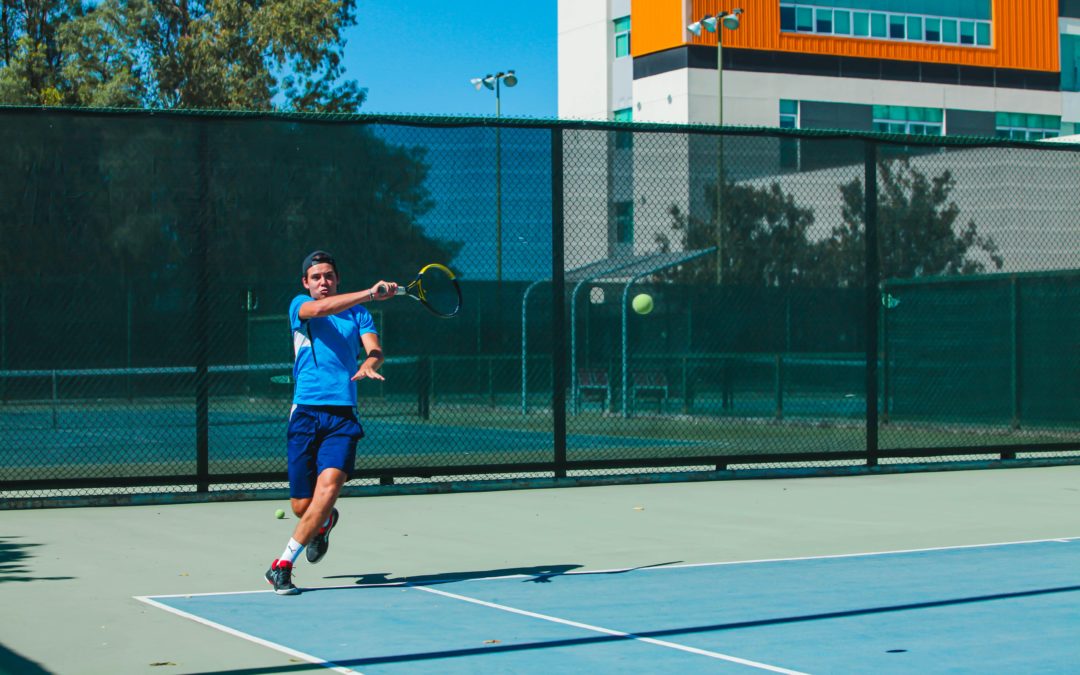
Tennis is one of the few sports that can be played on various surfaces, unlike basketball or soccer. While we know that every tennis court has its own unique characteristics, we often don’t realize to what extent a player’s style of play and the ball’s bounce are affected. In fact, this explains why many players prefer or perform better on a specific type of court—such as Rafael Nadal on clay courts or the recently retired Roger Federer on grass courts.
Now that we’ve already covered the characteristics of each type of court in previous blog posts, we’ll compare them, focusing on the type of bounce and the playing experience. Will you join us?
CLAY COURT: SLOW PACE, ELEVATION, AND DURABILITY
Clay courts are the slowest courts you’ll find, a fact due both to the amount of clay on the surface and to the moisture. On these courts, the ball bounces much higher and takes longer to drop, resulting in longer rallies, greater fatigue for the players, and longer matches. This requires tennis players to have great endurance. They also tend to be baseline players (they play from the back of the court), thus avoiding moving up to the net.
ARTIFICIAL GRASS OR TURF: FAST, LOW, AND UNEVEN
The quintessential classic. It produces fast, low bounces, and since the grass is not a smooth surface, the ball bounces erratically. This forces players to make quicker shots and hit flat, sliced shots, using a volley-based game to avoid the ball bouncing as much as possible.
SYNTHETIC RESIN: SPEED, CONSISTENCY, AGGRESSIVENESS
This type of court is also very fast and resembles a concrete court; it’s also perhaps the fairest for players. The ball bounce is consistent (depending on whether the court has more or fewer layers of resin), fairly uniform, and well-defined, which makes for a very comfortable and enjoyable game. It’s also one of the most aggressive surfaces because it’s fast: players move quickly from side to side and use techniques such as serves, drives, flat backhands, and sharp volleys.
POROUS CONCRETE: BALANCE, VERSATILITY, HIGH STANDARDS
Somewhere between artificial turf and clay lies porous concrete. On this surface, the ball bounces very quickly at a medium height—neither high nor low—but it’s perhaps the most consistent, balanced, and predictable compared to the others. This allows for a more versatile game where you can move to the net but also hit from the baseline. That said, it requires a high level of physical fitness and is more physically demanding.
What kind of track do you prefer?