CONSTRUCTION
TENNIS COURTS
Our services
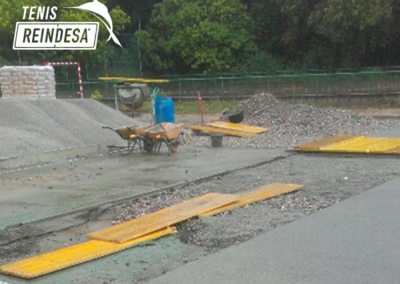
Construction
tennis courts

REHABILITATION
TENNIS COURTS

MAINTENANCE
TENNIS COURTS

TYPES
TENNIS COURTS
What types of courts do we manufacture?
Find out more with no obligation. We build throughout Spain
SURFACE TYPES
for playing tennis
ITF Certifications
We work with the leading brands certified by the ITF.
Test Code: ITF CS/01/02-14-407


REINGREEN ®
(SPONGED FIBER)
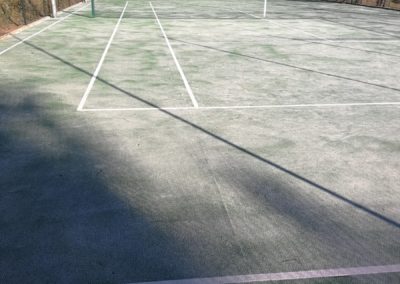
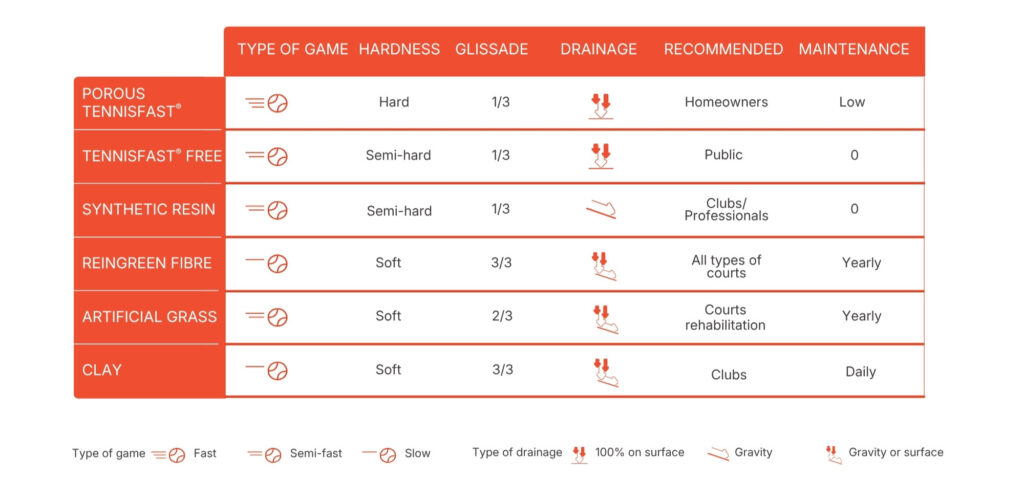
It is well-suited for areas with extreme weather conditions, as it withstands low temperatures. The surface is ITF-certified as Slow 4 and suitable for international competitions.
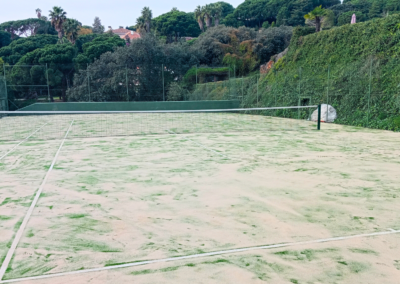
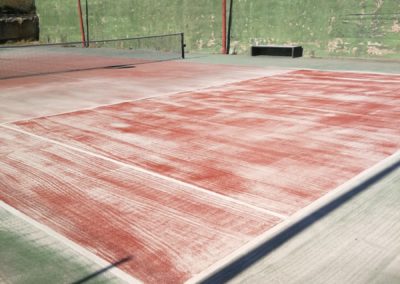
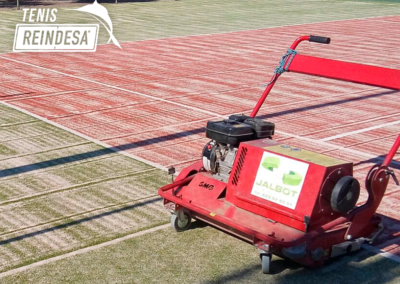
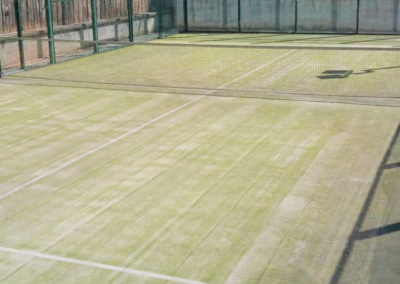
Reingreen ® (fluffed fiber) requires little maintenance and is well-suited for restoring damaged courts.
Grass
or artificial grass
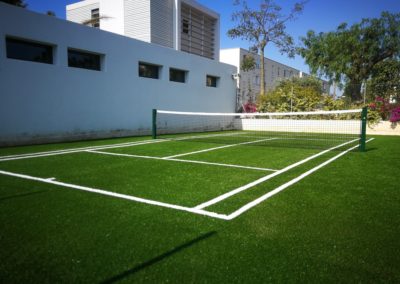
Natural grass is the original tennis surface. It is a fast surface with an irregular bounce and is relatively rarely used. The construction and maintenance of this type of tennis court are costly and complex.
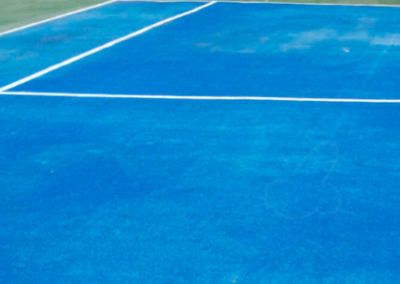
Tennis courts are currently being built with artificial turf filled with silica sand, which provides a surface that is durable and low-maintenance.
Clay court
clay
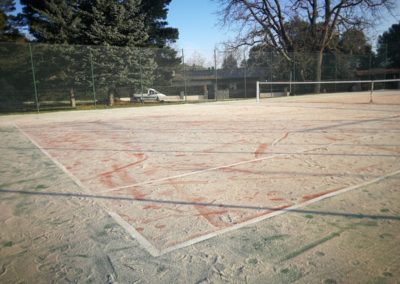
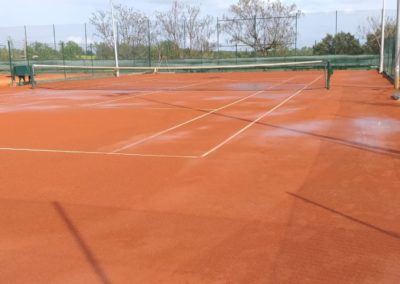
The first popular alternative to grass surfaces was the construction of clay courts. The material used to build them is clay. They require maintenance, including periodically replenishing and leveling the material. They must be watered daily, and during matches, they must be swept to smooth out the marks and uneven spots caused by athletic shoes and the ball bouncing.
The defining characteristic of a clay court is the slow bounce of the ball and the player’s ability to slide across the surface. This leads to a more defensive style of play, based at the baseline, in which points last longer, with more shots over the net, requiring greater preparation to win the point.
SYNTHETIC RESIN
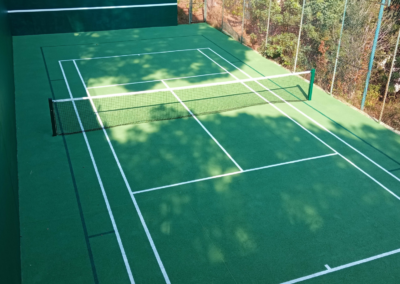
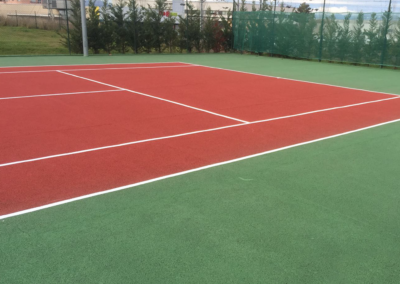
Synthetic courts can offer maximum comfort and quality of play depending on the layers and the substrate on which they are installed.
From a standard finish that offers a lively game with consistent bounce, to the top-of-the-line Cuishon which, depending on the layers, will provide a comfortable playing experience while protecting our joints during play. These surfaces were originally built on specialized asphalt bases, although today, following specific instructions, they can also be installed on concrete substrates, making them an excellent solution for restoring any type of surface.
Resin maintenance and restoration are very easy to perform and cost-effective.
TENNISFAST FREE®
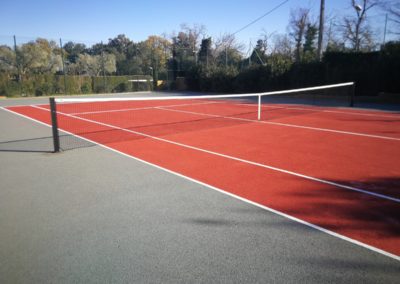
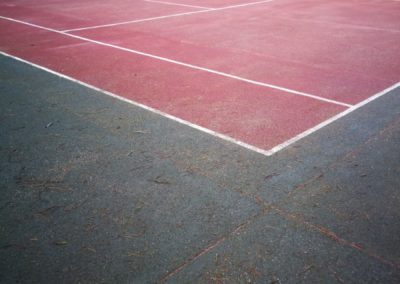
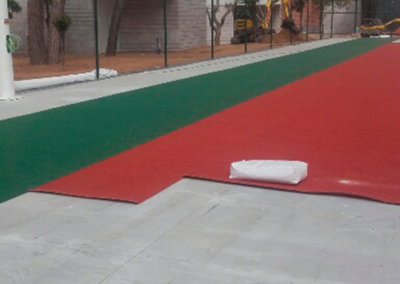
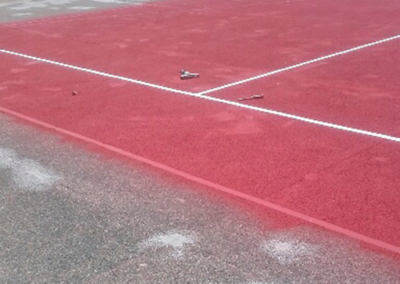
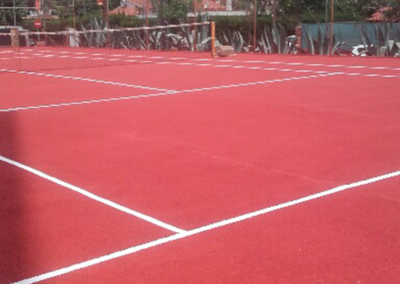
It is a type of continuous surface, without expansion joints, applied hot using special machinery and finished in a color of your choice; it offers excellent drainage and is versatile in its use.
Since it has no seams, it always provides a consistent bounce for the ball, without any sudden changes in surface level.
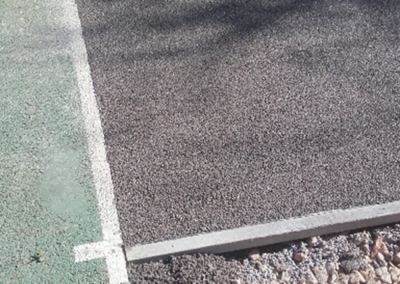
Semi-hard track; its high porosity provides better traction on the surface than on a completely smooth surface.
Ideal for restoring worn-out courts and for heavy-duty use (community centers, schools, etc.)
TENNISFAST ®
Quality in tennis court construction: Tennisfast® registered trademark
Hard courts, also known as porous concrete courts, are the most common type of court in modern tennis.
They are less expensive, require less maintenance than clay courts, and are less affected by inclement weather.