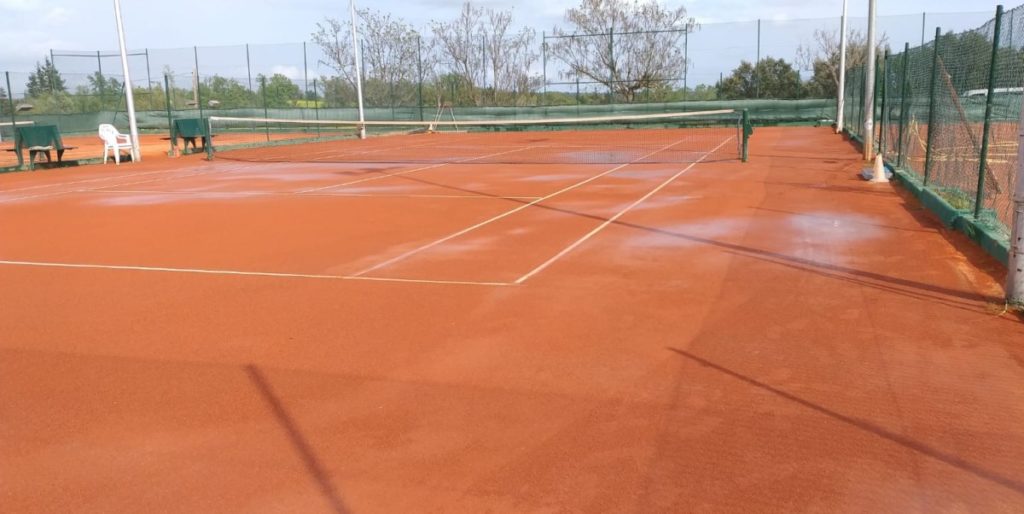
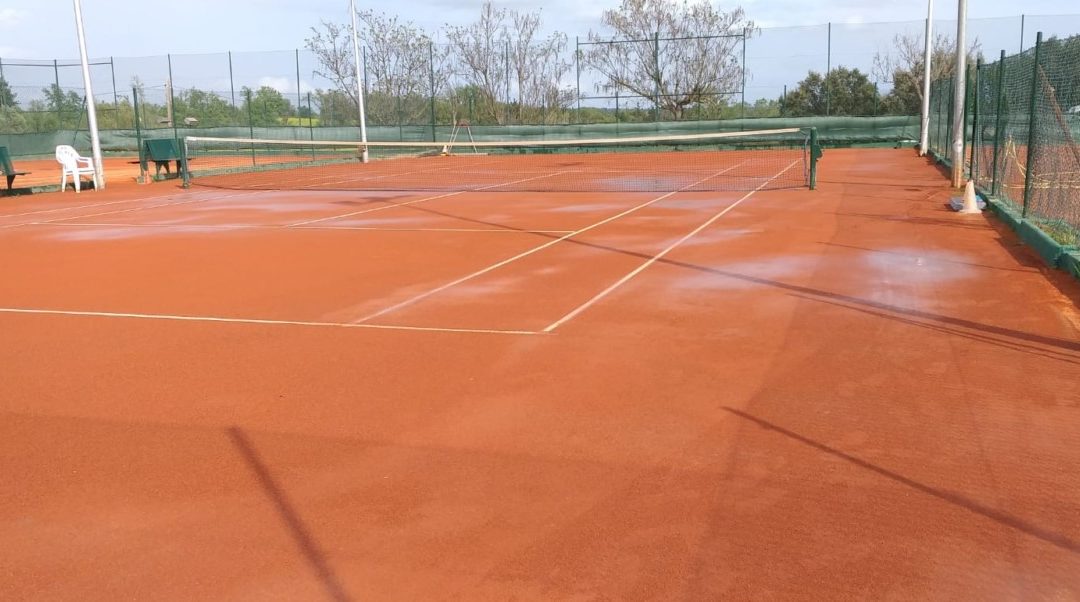
As we saw earlier, there are different types of tennis courts, each with its own specific features and characteristics that make them unique in terms of ball bounce, playing style, and, of course, maintenance.
Today we’ll focus on clay courts, one of the specialties we work with at Tenis Reindesa. It’s also one of the most common types of tennis courts in Spain. Keep reading to learn how to keep your court in top condition!
BEFORE THE GAME
Clay courts are made of brick dust and clay, which provides excellent traction but also requires a high level of maintenance. Start with daily care—especially if we’re planning to play tennis—since, first and foremost, we’ll need to prepare the court. Literally. How?
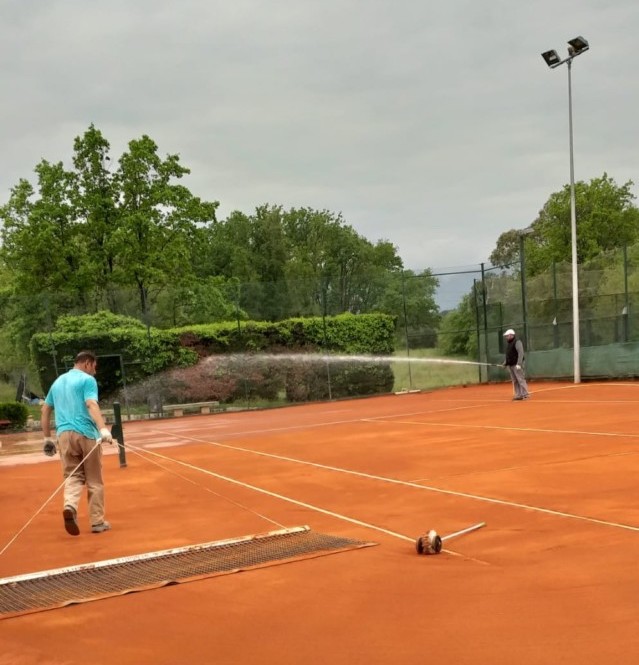
- Spread the soil evenly using the mat. This way, we smooth out the entire surface, making sure not to miss any areas that might be stepped on during the game.
- Sweep the lines with a brush to remove the layer of dirt that will make it difficult to see the field boundaries during the game.
- Water the ground until it is moist (without overdoing it, since that would result in a muddy track). This is done so that the ground isn’t too loose, thereby preventing slips or the wind from blowing it away. The amount of watering required depends on the season (summer>, fall, and winter).
REGULAR MAINTENANCE
- Loosen the soil. From time to time, you’ll need to check to make sure that hard layers of compacted soil aren’t forming, which can lead to soil compaction and cracking. To do this, you’ll need to use a scarifier.
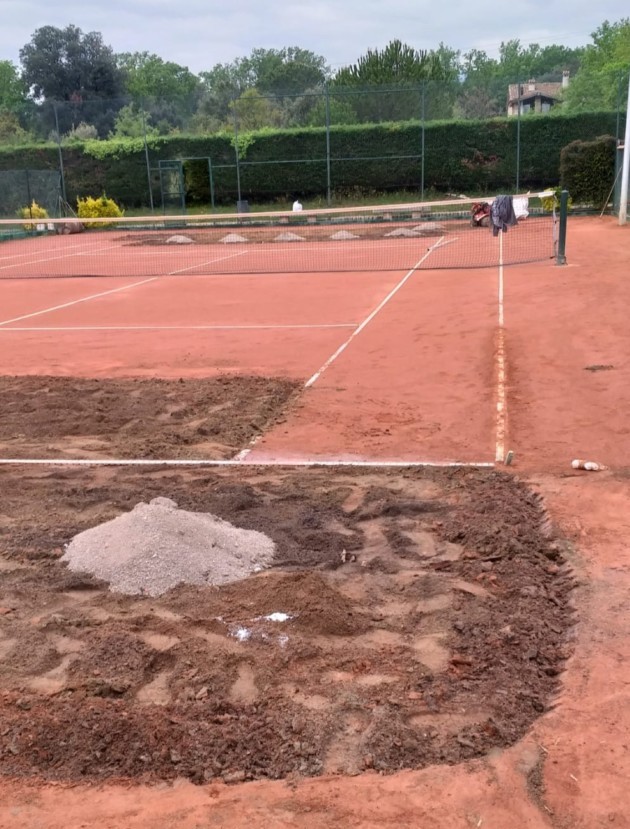
- Check to see if the amount of compacted soil decreases. Some areas, such as the area around the baseline, lose soil faster than others, so it’s important to spot any unevenness in the ground early on, replenish the soil, and water it within the next 3 days.
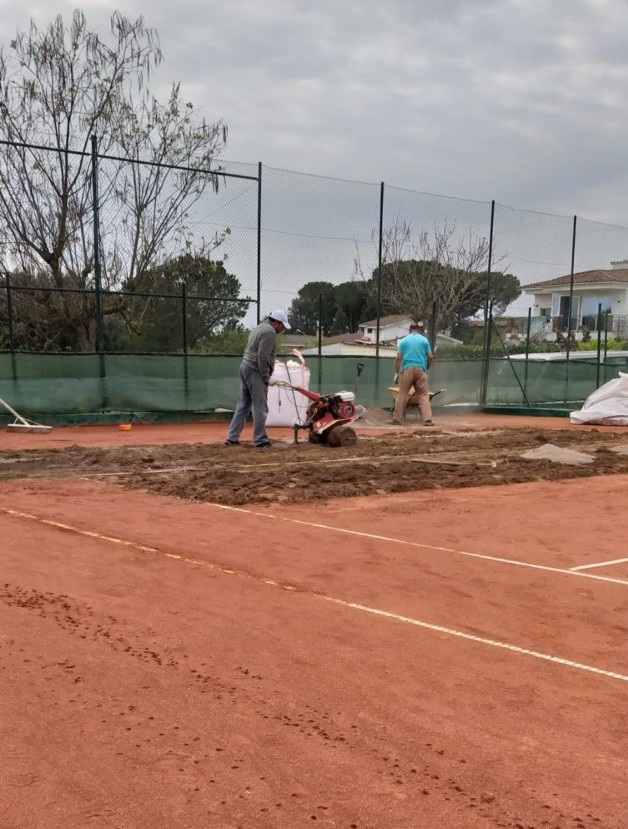
ANNUAL MAINTENANCE
A thorough annual maintenance check not only does no harm… but is actually recommended. And it depends on how consistently you’ve followed the previous steps. What does it involve?
- Level the tracks by scraping down the high spots and patching the areas where soil is missing.
- New year, new beginning. The weather may have damaged or washed away some of the clay, so we’ll have to replace it.
- Inspect and restore the lines on the court as needed, since it is very important that the court boundaries remain clearly visible at all times to ensure an enjoyable game.
Do you have any questions? Feel free to contact our team of tennis professionals.