
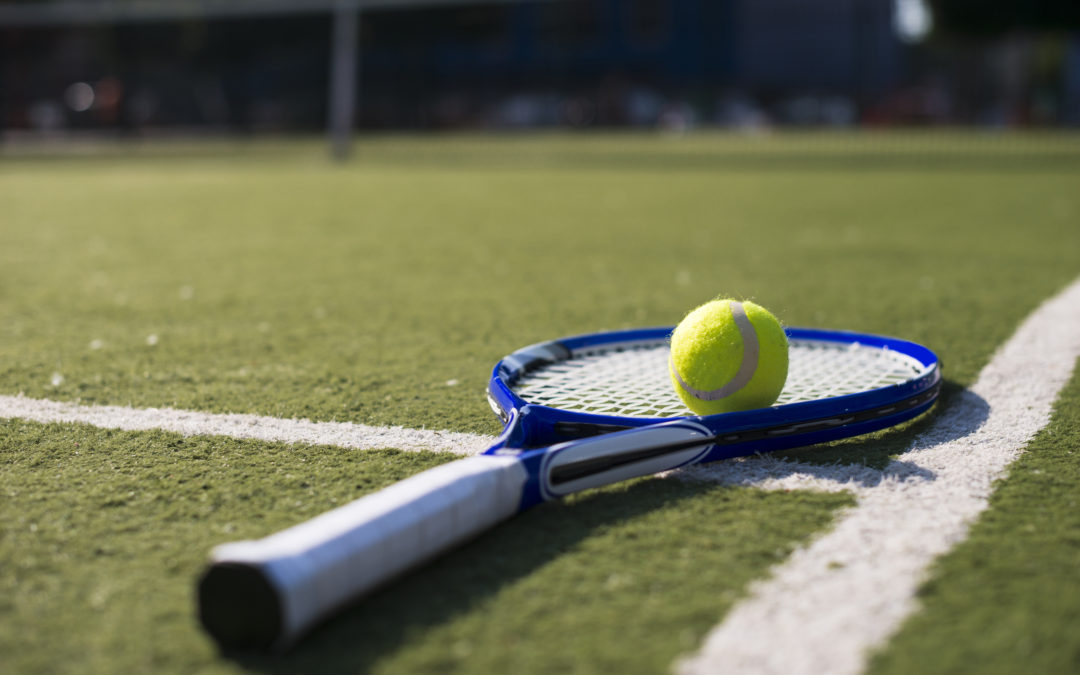
Artificial grass has become a very popular surface for playing tennis in recent years. In addition to being more affordable than natural grass, it offers a uniform and consistent surface, allowing for a more precise and predictable game. However, while keeping an artificial turf court in perfect condition is much easier, you still need to follow certain maintenance guidelines to ensure its longevity. In this article, we’ll give you the keys to keeping an artificial turf tennis court in the best possible condition.
1. REGULAR CLEANING
The first step in maintaining an artificial turf field is regular cleaning. The surface should be swept regularly—at least once a week—to remove leaves, twigs, dust, and other debris. You can also use a vacuum cleaner to remove debris, but always set it to the lowest suction setting; otherwise, use a leaf blower to remove the debris.
2. BRUSHING
Brushing artificial turf is an essential part of keeping it in good condition. It helps lift the turf fibers and maintain their softness and elasticity. Use a stiff-bristled brush for this task. For very large areas, you can use a turf comb to make the task easier. Be sure to brush the surface in different directions to ensure that all the fibers are properly lifted. However, avoid brushing the turf when it’s wet or right after it has rained, since the sand will stick to the brush; it’s best to do this when the turf is dry so that the sand is distributed more evenly.
Once a year, if necessary, you can perform what is known as professional de-compaction when the grass blades have become flattened and compacted, in order to restore them to their original shape.
3. FILL MAINTENANCE
The infill for an artificial turf court is essential for maintaining a uniform and stable surface. The infill for tennis or padel courts must be silica sand—never rubber ( which is intended for soccer fields or other sports)—and must be checked regularly to ensure there is enough of it and that it is evenly distributed across the entire surface. A lack of infill can cause the surface to sink or become warped, which can negatively affect play. In addition, the infill level should be checked regularly, and more should be added if necessary.
4. IRRIGATION AND MOISTURE CONTROL
Should you water artificial turf? Although it may seem counterintuitive, it’s not as strange as it sounds. If the surface is too dry, it can tear and become damaged easily. On one hand, we’re cleaning the surface of dirt, but at the same time, we’re moisturizing and cooling it, especially in hot climates. In winter, it’s enough to water at least once a month during the middle of the day, while in the hot months it’s recommended to do so more frequently—first thing in the morning and about twice a week.
Avoid overwatering, because too much water can cause waterlogging and mold growth.
5. TREATMENT OF SPOTS
If, unfortunately, the artificial turf gets stained and brushing, blowing, or using water isn’t enough, you can use a little mild soap to remove the stain. For very stubborn stains, you can use a mixture of water and white vinegar. In any case, it’s important to always avoid using harsh chemicals that could damage the surface.
6. REPaint the lines
Currently, the lines are made of white turf, the same material as the rest of the court.
In the case of very old courts with painted lines, it’s possible that, due to wear and tear and weather conditions, the court’s boundary lines may fade. If this is the case, it might be a good idea to repaint them once a year to ensure that play remains comfortable and precise.
In conclusion, maintaining an artificial turf court requires some effort, although perhaps less than other types of courts, such as clay courts. By following these basic guidelines, you can keep the surface in the best possible condition.
Do you have any other questions about how to maintain an artificial grass tennis court? Contact us, and we’ll be happy to help!