
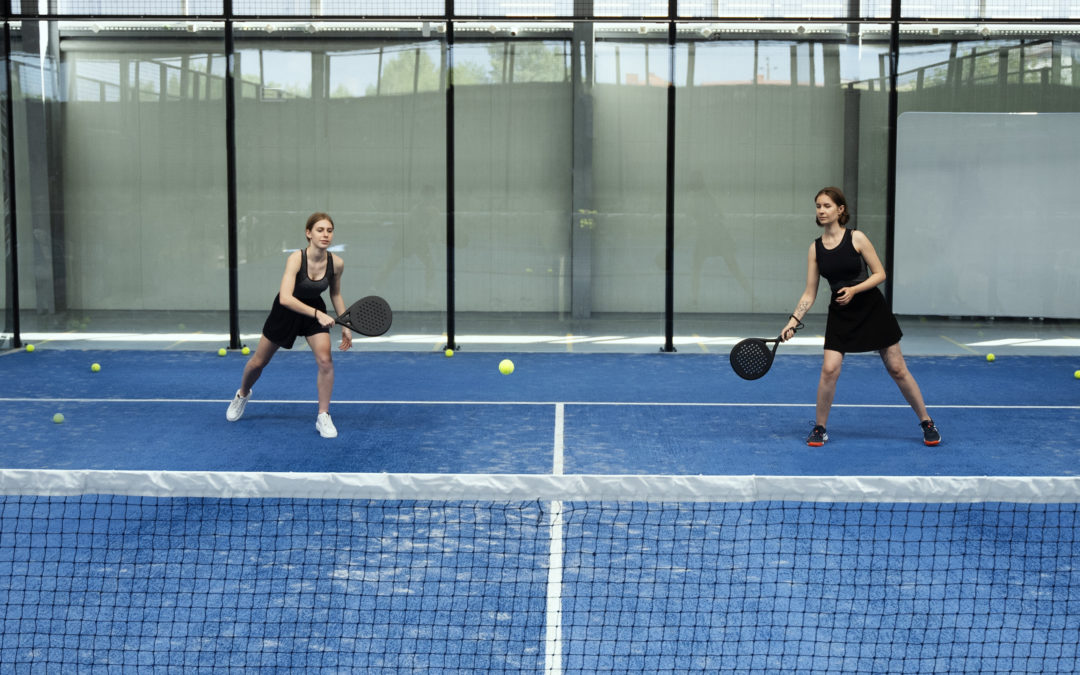
Padel has experienced a dramatic surge in popularity in recent years (much like pickleball), becoming one of the most widely played racket sports worldwide. One of the reasons for its success lies in its dynamic, fun style of play , which is suitable for anyone, as well as in the versatility of padel courts, which can be adapted to different surfaces, walls, and game modes—all of which influence the game’s performance.
In this article, we’ll explore the different types of padel courts, categorizing them based on their surface, wall structures, and gameplay characteristics. Let’s get started!
PADEL COURTS BY SURFACE TYPE
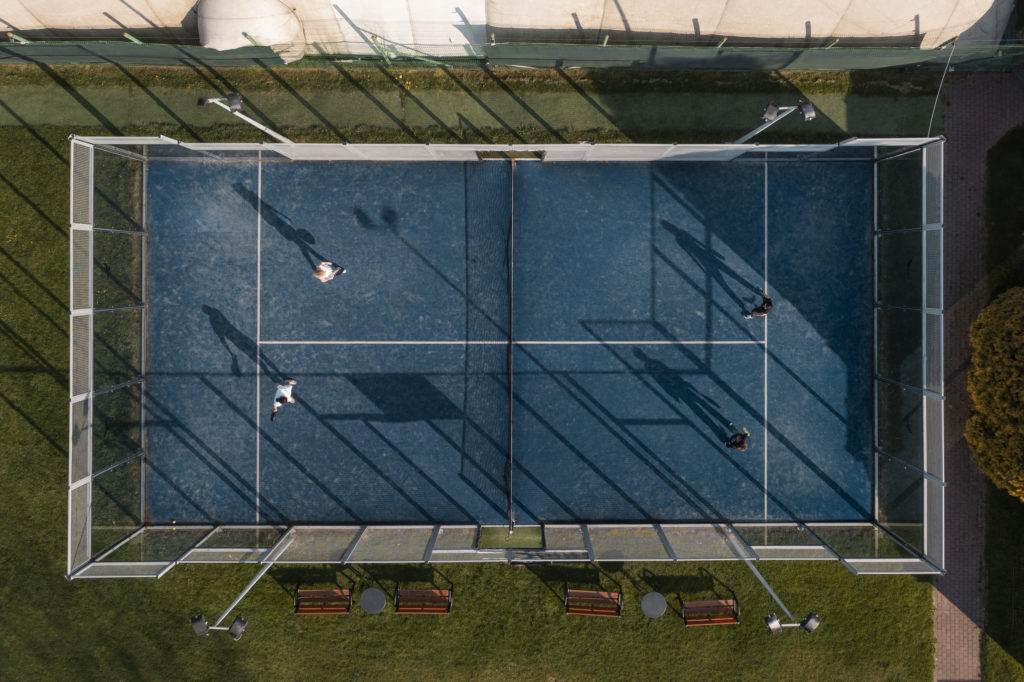
The surface of a padel court must be flat, level, and uniform, as well as a single color (green, blue, or earth-toned)—different from the color of the walls—and measure 10 meters wide by 20 meters long. As for regulation court surfaces, there are four varieties, each with characteristics that determine the style of play:
ARTIFICIAL TURF
Artificial turf is one of the most commonly used materials, as it is the surface used on the World Padel Tour circuit. A padel court with artificial turf provides a lower bounce, resulting in a slower-paced game, since the ball is cushioned when it hits the ground.
Materials such as silica sand are often mixed into artificial turf to ensure better traction for shoes and prevent slips or injuries. It is one of the most durable types of flooring when high-quality materials are used; polyethylene and polypropylene are the most commonly used because they are less abrasive.
SYNTHETIC RESIN
This type of surface offers great comfort during play, as the resin provides cushioning while also ensuring a good grip. On a synthetic resin padel court, the speed of play varies depending on the shot, allowing for both fast and slow bounces. Because of all these characteristics, it is the most commonly used surface in tournaments.
POROUS CONCRETE
Unlike regular concrete, it is not mixed with sand, which would act as a binder. These surfaces are fully permeable, with numerous pores that facilitate water drainage. In terms of gameplay, they allow for fast movement, though not quite as fast as on cement surfaces.
CEMENT
This type of court surface has been in decline and is among the least popular, mainly because it makes the game too fast-paced and chaotic, which requires high levels of agility and thus leads to greater physical exertion. The game is harder for spectators to enjoy and more tiring for the players.
PADEL COURTS BASED ON THEIR WALLS
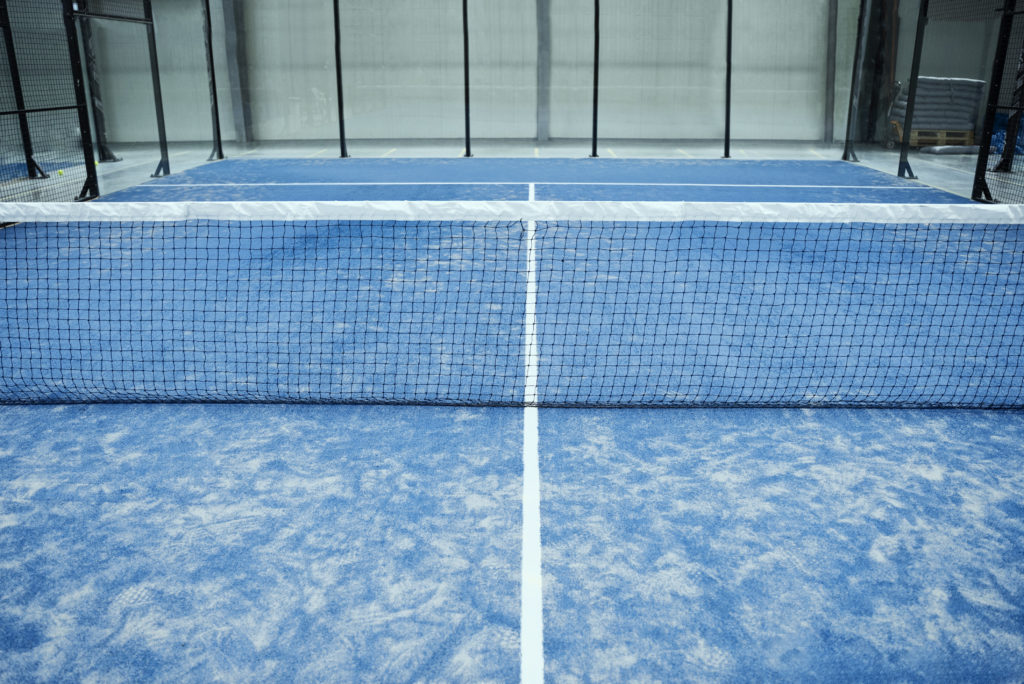
Another way to distinguish between different types of padel courts is to classify them based on their walls, an important feature that can vary depending on the court’s design.
PADEL COURT GLASS
This is the most common and standard court found in padel (here you can see this one and this example we built at Tenis Reindesa). Glass is also usually the preferred material because it provides excellent visibility and allows the ball to bounce well. The thickness can vary between 10 and 12 mm.
PADEL COURT WALL-MOUNTED OR BUILT-IN
They are usually created by converting tennis courts that have fallen into disuse or become obsolete. The existing concrete back and side walls are reused, and a metal structure is added. Unlike glass-enclosed courts, they provide better sound insulation.
PANORAMIC PADEL COURT
They get their name from the fact that they offer visibility from the outside and inside on all sides, since all the walls are glass. Their origins can be traced back to the first televised padel broadcasts, as they allowed viewers to see the game perfectly. They’re typically found in enclosed spaces. Laminated and tempered glass that’s thicker than standard glass is usually installed—often 12 mm thick for greater strength—and anchored only at the top and bottom, leaving the center unsupported.
PADEL COURTS BY GAME MODE
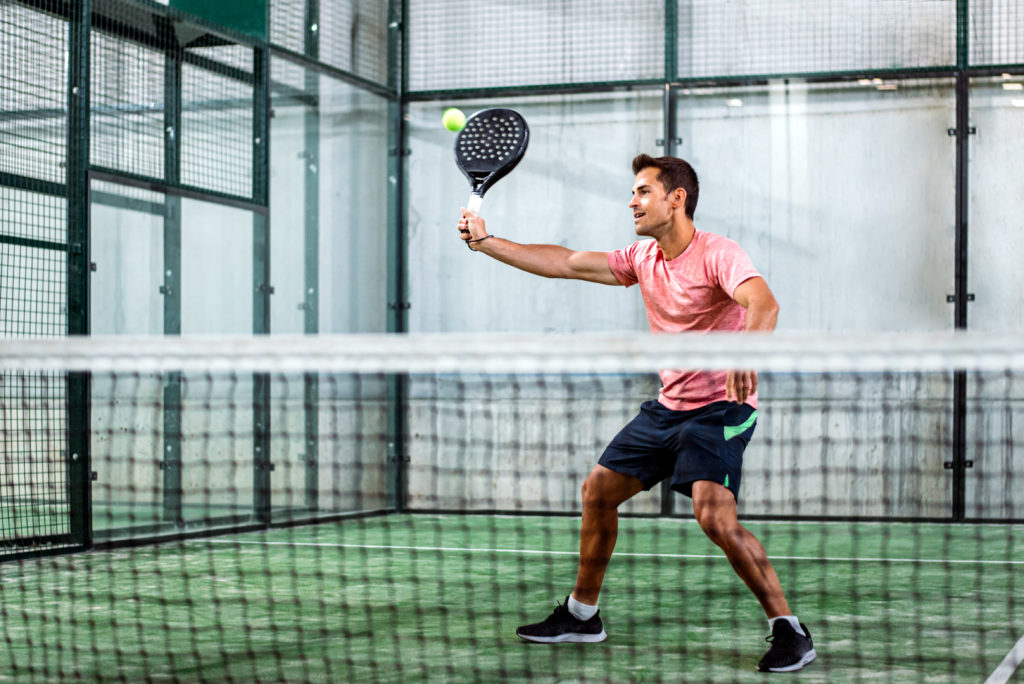
Last but not least, we can classify padel courts based on the type of play that takes place on them.
PADEL COURT 2X2 OR DOUBLES
The most common type of court, designed for doubles play. The area specified by official bodies for doubles padel courts is a rectangle measuring 20×10 meters.
PADEL COURT SINGLES
Unlike the previous one, on this court the game is one-on-one, and while the length remains 20 meters, the width is reduced to just 6 meters. These courts are typically used for individual training or for matches with only two players. With fewer players, the game is more dynamic, featuring greater movement and action, even though the serve is significantly reduced due to the court’s width.